What Teaching Kids About Bermuda’s Marine Life Taught Me
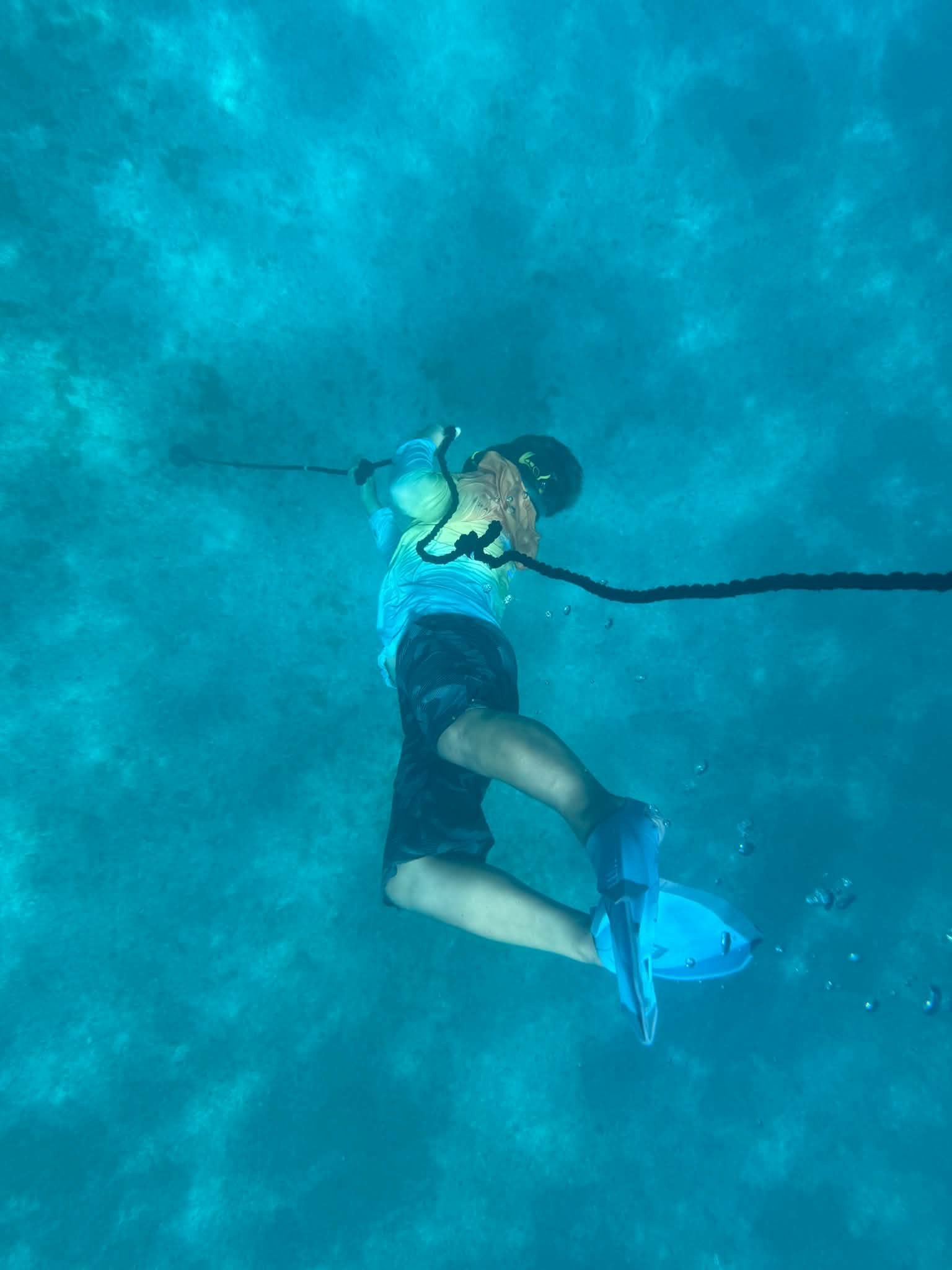
Teaching teenagers to freedive is about as fun as it gets
As I’ve mentioned before I was born in Bermuda and moved away when I was young, but I've spent most summers there ever since staying with family. So although I've lived in the States for most of my life, Bermuda has always been a pretty big part of my identity.
I've spent an absurd amount of time in the water there. Snorkeling, freediving, exploring, fishing, looking at fish and coral, and generally paying attention to whatever was around me. As you might imagine this sort of exploration is probably one of the main reasons I became a biologist.
I've had Bermudian status for years, but this summer I finally had the opportunity to actually work in Bermuda. I spent several weeks teaching teenagers the basics of freediving and about Bermuda's marine life through the Bermuda Aquarium, Museum & Zoo.
I figured I knew Bermuda's marine life pretty well. I have a ton of iNat observations for goodness sake.
It turns out that teaching it is different from knowing it.
When you're swimming around yourself, you don't really think about how you identify a fish. You just see it and know what it is. Try explaining the difference between a queen, princess and rainbow parrotfish to someone underwater and suddenly you're breaking down body shape, color, mouth shape, markings and what the fish is actually doing.
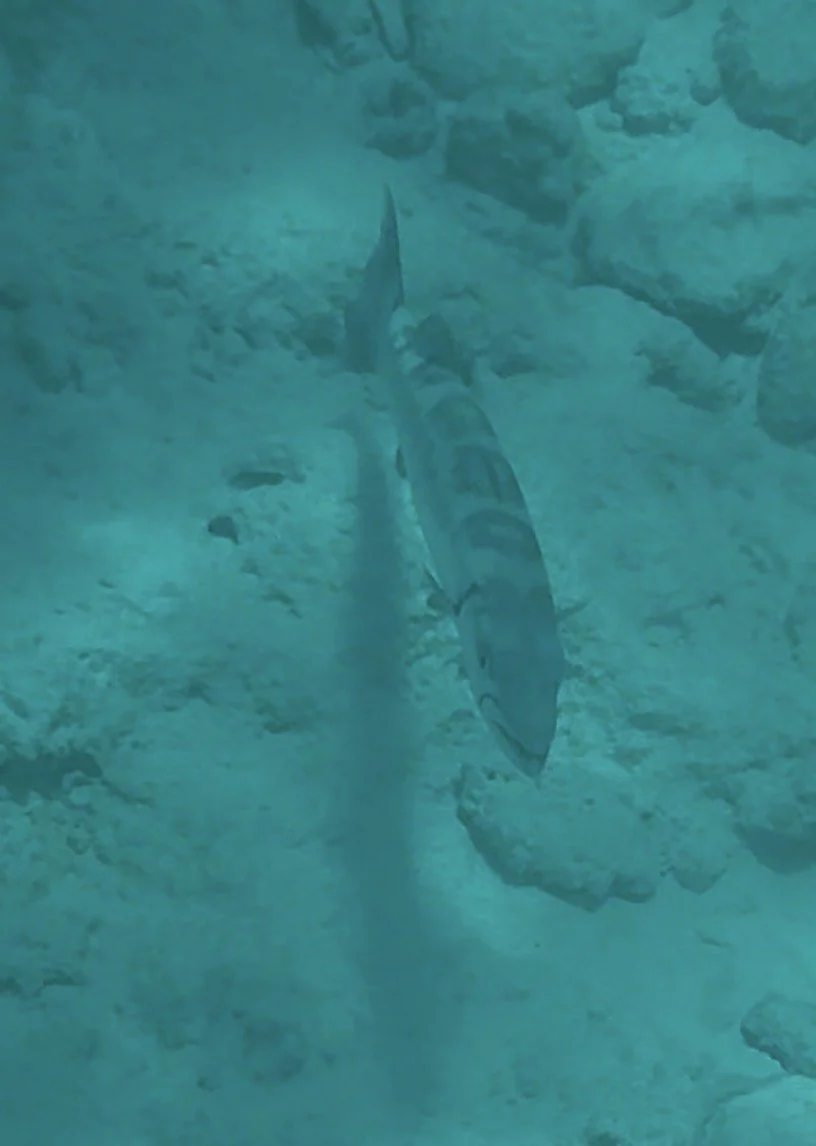
There’s nothing quite like being face to face with Bermuda’s most common assassin.
That ended up being one of my favorite parts of the whole thing.
I didn't want the kids to just memorize a list of fish. I wanted them to start looking at what the animals were actually doing.
A parrotfish isn't just a colorful fish. It's eating algae off the reef. A trumpetfish isn't just a bizarre-looking skinny fish. It's a predator that uses its shape and behavior to hunt. A barracuda isn't simply the scary fish with teeth.
Once you start looking at the reef that way, everything gets more interesting.
I also found myself explaining the reef in ways that probably came from being a gardener. I think about plants as communities all the time and what is occupying space, what's competing with what, who's eating whom and why something is growing in one particular spot.
A coral reef isn't exactly a garden, though coral gardening is now marvelously a thing and so there are many familiar ideas there. Corals build structure. Algae compete for space. Herbivorous fish eat the algae. Predators eat the herbivores. Sponges filter water. Everything is doing something.
And then there are all the things you can walk right past or swim right over without noticing.
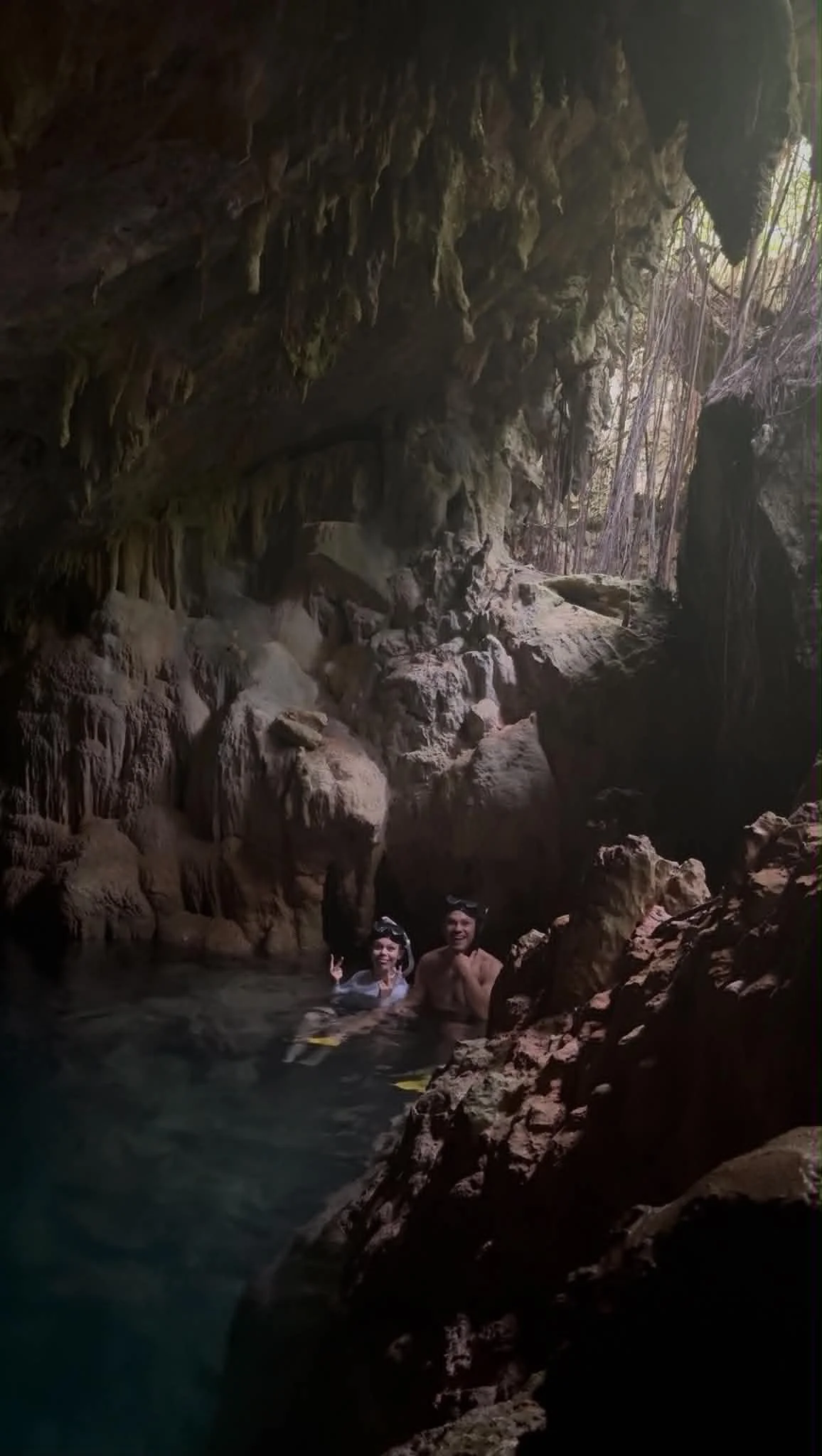
Me and Mini-Me in one of our favorite swimmable caves in Bermy.
That's something I've written about before in Bermuda's Best Kept Secrets. You don't necessarily have to find some secret location, though there are certainly many still well hidden. Sometimes you just have to slow down enough to notice what's already there:
Even something as obvious as Bermuda's pink sand has a story behind it. I made a little video about it recently because it's a good example of what I was trying to teach the kids: don't just look at something because it's pretty. Figure out what you're actually looking at.
I also got to have my daugher Evey come visit for a week while I was there, which made the whole summer feel a little more personal. I’m going to try and bring her with me to camp next time. I've been taking her to Bermuda for most of her life, and there's something pretty satisfying about watching your kid start getting interested in the same strange little things you've been interested in forever.
The funny thing about teaching the kids was that I thought I was going to be giving them information.
Mostly, I was giving them a way of looking at things.
And I ended up doing a little more of that myself.
I've spent a lot of time in Bermuda. I thought I knew what I was looking at.
Apparently there's still plenty left to discover.
As luck (or unluck) would have it, we encountered a Pink Meanie during one of our dive days. Of course I had bottles of Sting Away with us just in case!