The Science Behind Sting Away Blue: A Better Approach to Portuguese Man-of-War Stings
With man-of-war stings on the rise, we are oftentimes approached by various medical agencies asking us what makes Sting Away Man-of-War treatment different. I wanted to share the details and thoughts behind our formulation by sharing an email exchange I had recently with a Chief Medical Director in Florida (I’ve redacted anything that may allude to the specific location in the interest in anonymity).
‘To Whom It May Concern,
Our Ocean Rescue Division is attempting to source a new product for man-o-war stings on our beach and I came upon your product doing research. I would like to speak with someone about the mechanism of action of the product to understand how it works and the efficacy of the treatment. Once I have that information, I will speak with our medical director to determine if we will use this on our beach with the lifeguards. I would appreciate any literature that you can provide to guide our decision and thank you in advance for your time.
Respectfully,
ANON”
Some version of this is typically my response:
“ANON,
It was great to chat with you the other day. Here's a breakdown of the science behind the Man-of-War formulation for Sting Away that you can forward onto your medical director.
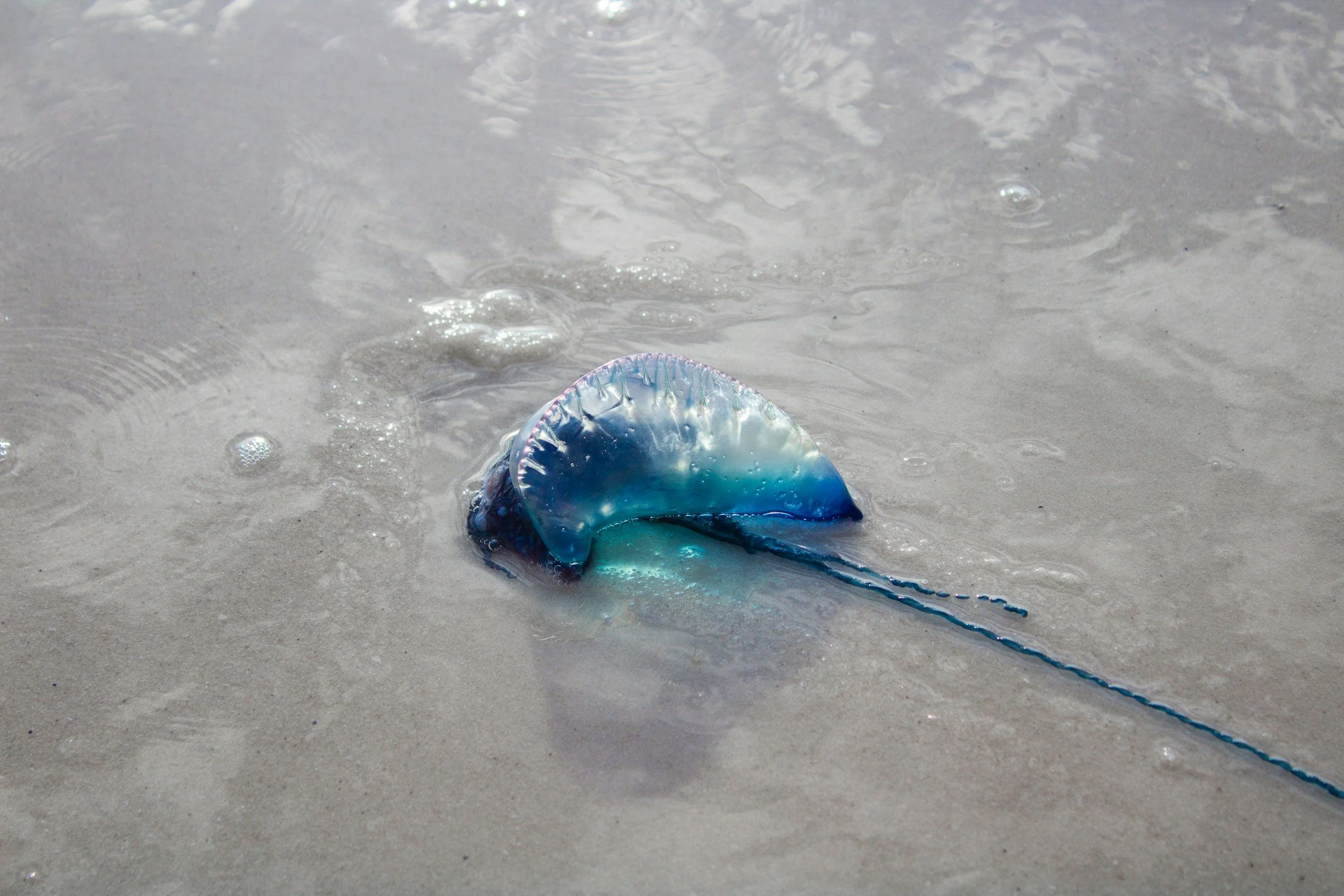
My goal wasn't to create another topical analgesic, but to develop a multifaceted treatment specifically addressing the different biological processes involved in Portuguese man-of-war (Physalia physalis) envenomation. With a background in botany and chemistry I headed to the literature to see what I could find. This was the early 2000s. Before it was a commercial product this was the mix I used to carry to the beach with me in Bermuda.
The final formulation contains zinc sulfate, lidocaine, Ipomoea pes-caprae (IPA) extract (this is a common plant in a lot of coastal environments called beach morning glory), and naproxen. I chose these to address different aspects of the sting response.
Zinc sulfate
One of the primary reasons I went with zinc was the direct Physalia physalis (man-of-war) toxicology literature.
Edwards and Hessinger demonstrated that Physalia venom produces a dose-dependent increase in calcium influx into multiple types of cultured cells through disruption of plasma-membrane integrity. Importantly, zinc ions inhibited this venom-induced calcium influx, and concentrations of zinc that blocked calcium influx also blocked the associated release of lactate dehydrogenase, an indicator of membrane damage and cytolysis.
A companion study by Edwards et al. similarly found that zinc and several other divalent metal ions inhibited the calcium influx produced by Physalia venom.
So the rationale for zinc was based on a direct Physalia-specific experimental finding: zinc interfered with a measurable cellular toxic effect of the venom, particularly its membrane-permeabilizing activity.
Lidocaine
Lidocaine is such an obvious choice but it's because its established as a local anesthetic and its demonstrated effect on Physalia nematocysts.
Birsa, Verity and Lee (2010) specifically studied Physalia physalis alongside other medically important cnidarians. They found that lidocaine provided immediate relief when applied to skin exposed to jellyfish tentacles. More importantly, pretreatment of Physalia tentacles with lidocaine prevented subsequent nematocyst discharge when the tentacles were exposed to chemical stimuli that would otherwise trigger discharge.
The authors proposed that this effect could involve blockade of sodium and/or calcium channels in the nematocytes.
This gave lidocaine a particularly useful role in the formulation: it could provide rapid local analgesia while potentially limiting additional nematocyst discharge from residual tentacles. So it shuts down stinging cells and numbs the site.
Ipomoea pes-caprae extract (IPA)
The inclusion of Ipomoea pes-caprae, commonly known as beach morning glory was based on both its longstanding ethnomedical use for cnidarian stings and experimental evidence. I grew up hearing about how this plant could be used as a poultice but never saw it done.
Pongprayoon et al. (1991) demonstrated that an extract of I. pes-caprae could neutralize toxic activities of crude jellyfish venoms, including proteolytic and hemolytic activity.
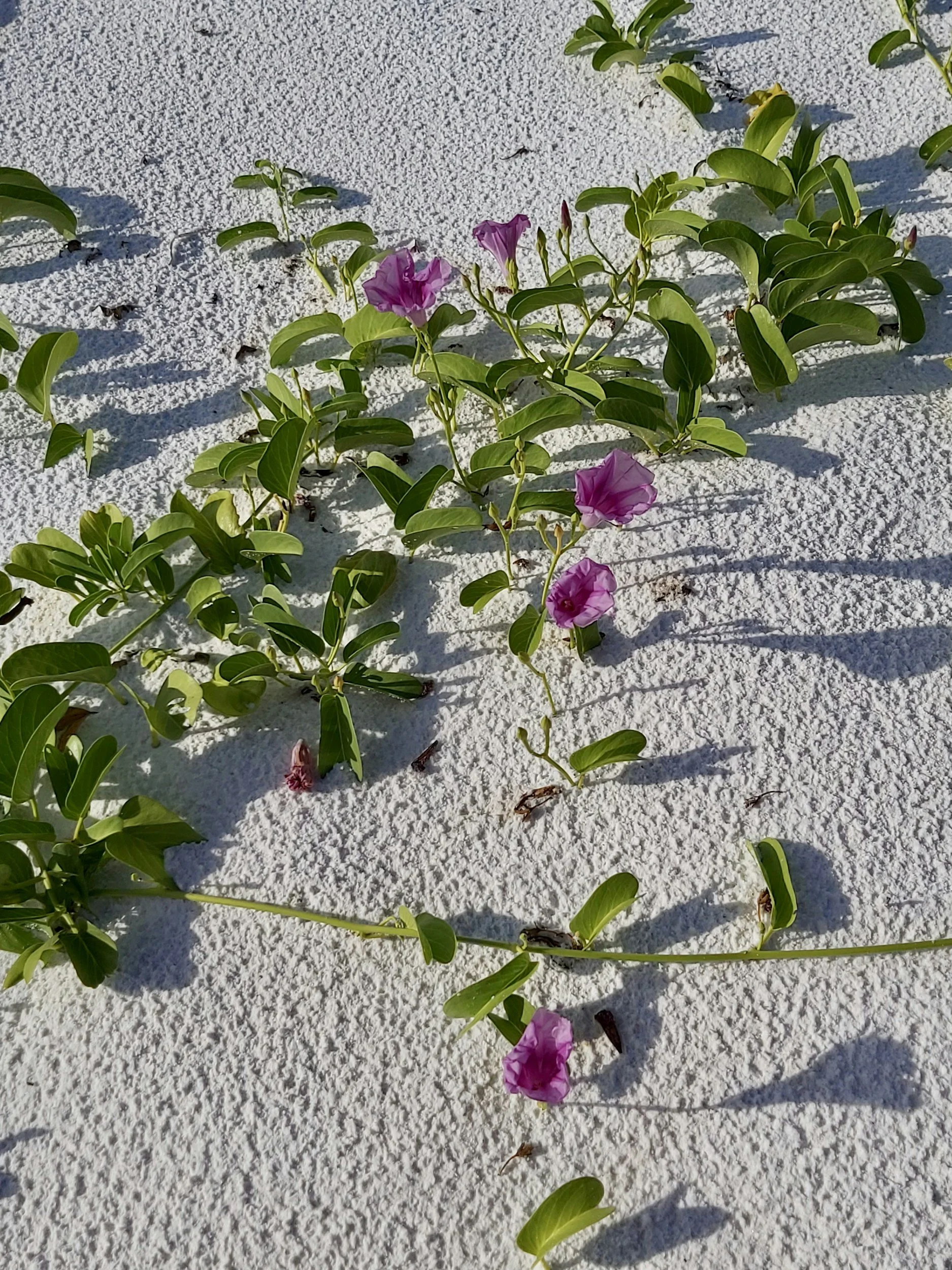
More specifically relevant to this formulation, Barth et al. (2017) subsequently tested a topical hydroethanolic I. pes-caprae preparation directly in a Physalia physalis venom model. Pretreatment with the extract significantly reduced venom-induced mechanical hypersensitivity in mice and inhibited several measures of inflammatory response. The investigators also identified effects involving pathways associated with TRPV1, bradykinin and protease-activated receptor signaling.
This provided a rationale for using IPA as the anti-inflammatory and antinociceptive component of the formulation, rather than simply as a traditional herbal ingredient. Always nice to know the probable science behind longstanding remedies.
Naproxen
Naproxen was incorporated to address the inflammatory and pain response following envenomation. Unlike the zinc, lidocaine and Ipomoea components, I am not aware of a peer-reviewed study demonstrating a specific pharmacological effect of naproxen against Physalia physalis venom itself. Its role in the formulation was based on its established NSAID activity and its ability to address prostaglandin-mediated inflammation and pain. A lot of people have sensitivity to ibuprofen so I went with naproxen.
Taken together, the formulation was designed around complementary targets rather than a single proposed mechanism:
Zinc sulfate — intended to address venom-associated cellular membrane toxicity, based on direct Physalia experimental evidence.
Lidocaine — provides rapid local anesthesia and has demonstrated inhibition of Physalia nematocyst discharge in vitro.
Ipomoea pes-caprae extract — addresses venom-associated nociception and inflammation, with experimental evidence specifically involving Physalia venom.
Naproxen — provides additional anti-inflammatory and analgesic activity through established NSAID pharmacology.
I tried to address the sting at several levels: residual nematocyst discharge, venom-associated cellular toxicity, acute pain, and the subsequent inflammatory response. Basically, everything I could find in the literature for each issue associated with stings.
Man-of-war season is such a huge issue in Bermuda and it's super evident that the stings different significantly in severity and reaction so I tried to target not only pain response but also continued nematocyst activity, toxin-mediated cellular effects, and inflammation.
I would be happy to provide the primary publications supporting the formulation or discuss the scientific rationale for any of the individual ingredients in greater detail.
Sincerely,
Aaron Kampe
Developer, Sting Away Man-of-War Sting Treatment”
To be honest it always blows me away that people (our competitors for the last 20 years or so) who make treatments for marine stings kind of just commercialized folk remedies.
One of the questions asked in a follow up to this email exchange involved dosages but also the use as vinegar as a prerinse. Vinegar has actually been shown to increase nematocyst discharge in a number of studies. Here’s just one example: Fenner PJ, Williamson JA, Burnett JW, Rifkin J. First aid treatment of jellyfish stings in Australia. Response to a newly differentiated species. Med J Aust. 1993 Apr 5;158(7):498-501. doi: 10.5694/j.1326-5377.1993.tb137588.x. PMID: 8469205.
Just a reminder to not use vinegar and never pee on it (urine is also usually slightly acidic) and can have a similar effect as vinegar. If you’re not lucky enough to have Sting Away nearby make sure you rinse it with ocean water and don’t rub the area while you do (this is the hardest part).
-Aaron